MIG, TIG, or Laser? A Practical Decision Guide for Modern Metal Fabrication
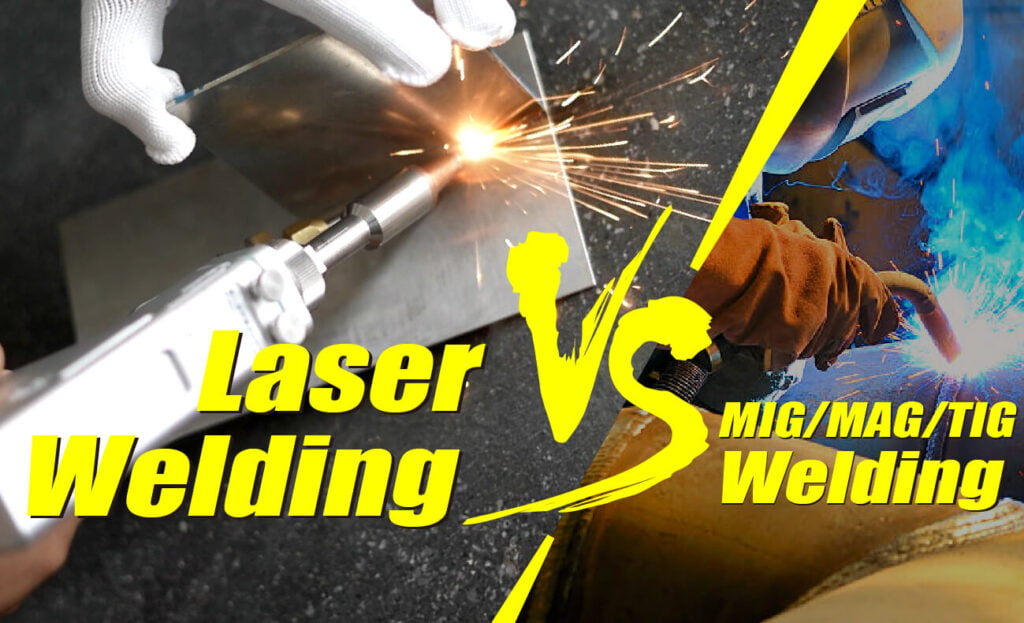
There is No “Best” Tool, Only the Right One
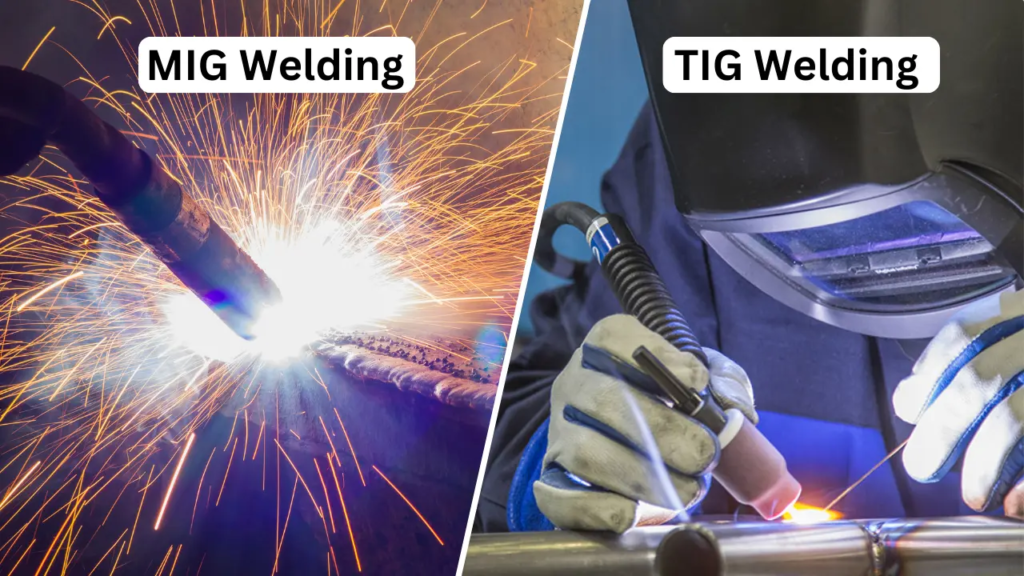
In the world of metal fabrication, selecting a welding method is not about finding the most advanced technology; it’s about finding the best fit for your specific production needs. While traditional MIG (Metal Inert Gas) and TIG (Tungsten Inert Gas) have been the industry backbone for decades, Handheld Fiber Laser Welding (Maikos Laser Systems) has introduced a paradigm shift in efficiency.
However, as consultants at Maikos, we believe in transparency. To help you make an informed investment, we have prepared this objective comparison of the three technologies.
Technical Comparison at a Glance
To understand where each technology sits in a modern workshop, we must look at the technical trade-offs. While Laser is the fastest, MIG and TIG remain the “problem solvers” for specific geometries.
| Feature | MIG Welding | TIG Welding | Laser Welding |
| Best For | Heavy structures, high volume | High precision, aesthetics | Speed, low distortion, ease of use |
| Heat Input | High (Risk of warping) | Medium to High | Extremely Low (Minimal deformation) |
| Welding Speed | Moderate | Low | Very High (Up to 5x faster than TIG) |
| Skill Level | Moderate (Months of training) | Expert (Years of experience) | Low (Hours of training) |
| Gap Tolerance | Excellent (Fills wide gaps) | Good | Limited (Requires precise fit-up) |
| Post-Weld Work | Extensive grinding needed | Minimal | Little to none |
Why Stick with Traditional Methods? (The Limitations of Laser)
Despite the excitement surrounding laser technology, traditional arc welding remains superior in several key areas:
- Wide Tolerances and Poor Fit-up: Laser welding uses a highly focused beam. If your workpieces have gaps exceeding 0.5mm due to imprecise cutting, MIG welding is far more effective at filling those voids.
- Heavy-Duty Structural Work: For welding carbon steel or structural beams thicker than 8mm–10mm, traditional arc welding provides the necessary penetration and strength more cost-effectively.
- Initial Capital Expenditure: If you only weld occasionally or run a small repair shop, the low entry price of a MIG or TIG machine remains an attractive factor.
Laser Welding Excels
Handheld laser welding is not a universal replacement, but for thin to medium gauge metals (0.5mm – 5mm), it offers a revolutionary advantage:
- Unmatched Speed: On stainless steel or aluminum under 3mm, laser welding is typically 3 to 5 times faster than TIG, allowing you to clear backlogs in a fraction of the time.
- Minimal Thermal Distortion: Because the heat is so concentrated, the Heat Affected Zone (HAZ) is tiny. This is critical for aesthetic parts or thin sheets where warping can ruin the entire workpiece.
- Bridging the Labor Gap: Finding certified TIG welders is increasingly difficult and expensive. Maikos systems allow an entry-level operator to produce professional-grade, consistent welds with just a few hours of practice.
- Multi-Process Integration: Many Maikos systems are 3-in-1 units, allowing the operator to switch between welding, cleaning, and light cutting, significantly optimizing the workshop floor space.
Maikos’ Rational Advice for Your Investment
Before choosing your next machine, evaluate your production based on these four criteria:
- Material Thickness: If you primarily work with 1mm–4mm sheets, laser is your best engine for ROI. For 10mm+ plates, keep your MIG machines.
- Upstream Precision: Does your cutting process (Laser/Plasma) ensure a fit-up gap smaller than 0.2mm? If yes, you are ready for laser welding.
- Aesthetic Requirements: Does your product require a mirror finish or go directly to powder coating? Laser welding can reduce your grinding and polishing costs by up to 80%.
- Workshop Environment: Laser welding requires specialized eye protection (OD4+ goggles) and a designated safety area. Ensure your facility can accommodate these safety protocols.
Conclusion: The Art of Balance
At Maikos, our goal is not to sell you the most expensive equipment, but the one that maximizes your productivity. If you are facing high labor costs and demand for high-quality thin-plate fabrication, laser welding is the future. For heavy, irregular structural work, traditional arc welding remains your most reliable ally.
Still undecided? Send your material drawings or requirements to the Maikos technical team for a free process evaluation report.